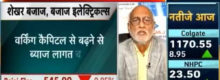


Rahul Bajaj: The Visionary Who Moved India
On his birth anniversary, we remember the visionary industrialist who transformed Indian mobility and built a legacy rooted in courage, innovation, and nation-building.
There are leaders who build businesses. And then there are leaders who build movements.
Rahul Bajaj was one such leader.
Between the 1960s and early 1990s, he didn’t just build an automobile empire. He gave a young nation its wings. And the vehicle that carried those dreams was the Bajaj Chetak.
The Scooter That Taught a Nation to Wait, And the Man Who Refused To
The Chetak wasn’t simply in demand. It was worshipped. Families didn’t just want one; they needed one. It represented progress, independence, and a better tomorrow.
But owning a Chetak required patience. Prospective buyers didn’t walk into a showroom and ride out the same day. They booked it. And then they waited, on average, a full decade. Sometimes longer, up to 15 years.
Why?
This was a product made entirely in India. The workforce was abundant. The demand was undeniable. Yet, the bottleneck was a rigid regulatory system historically known as the License Raj. From 1950 to 1990, industrial growth was tightly controlled by strict government frameworks, approvals, and manufacturing quotas. A factory was only legally allowed to produce a specific number of goods each month.
Rahul Bajaj constantly advocated for an increase in manufacturing limits. He highlighted the extensive waiting lists of everyday citizens. He explained how increasing production would employ thousands of rural workers and serve millions of families. He made every logical, moral, and economic argument there was to make.
Yet, the prevailing bureaucratic policies kept production caps firmly in place.
Principled Defiance in the Face of Restriction
Faced with a system that restricted growth, Rahul Bajaj chose a path of principled defiance. Prioritizing the clear needs of the public, he chose to accelerate production beyond the legally mandated quotas to meet consumer demand.
The regulatory response was swift, hitting him with a high-stakes Monopolies and Restrictive Trade Practices (MRTP) case and the technical threat of imprisonment. During the tense proceedings, when the judge directly asked, “Are you ready to go to jail for this?” Rahul Bajaj didn’t blink.
“Sir, my grandfather went to jail for my country’s freedom. I stand ready to do the same, for producing on behalf of my motherland.”
His pure intent and sheer grit left the system silent, and the legal challenges were ultimately dropped.
That is the true Bajaj spirit. It was never just about building a business. It was about building a nation.
A Leader Who Lived His Values
That courage didn’t emerge from nowhere. It came from a man who lived what he believed, every single day.
In 1964, fresh out of Harvard Business School with an MBA and the world at his feet, Rahul Bajaj made a choice that surprised many. Instead of choosing an aristocratic home in a metro city, he packed his bags and moved his family to Akurdi, on the outskirts of Pune, a remote, largely undeveloped area.
He built a house on the factory campus. And he stayed there. For decades.
He didn’t want his children growing up with a sense of elite entitlement. So, he sent his kids to the local school alongside the children of his own factory workers. He didn’t view his workforce as just numbers on a balance sheet; he viewed them as the heartbeat of the institution. He believed a company is only as strong as its community, and he chose to live right in the middle of it.
1991: Disruption and Reinvention
The real test came in 1991.
India opened its economy. The walls came down. And suddenly, global giants with deep pockets and cutting-edge designs flooded the market. Consumer preferences evolved rapidly, from family scooters to powerful, stylish motorcycles.
By 2001, Bajaj Auto was in crisis. Critics wrote them off. “A scooter company,” they said, “can’t survive in the age of speed.”
Rahul Bajaj didn’t panic. He didn’t let ego or past glory blind him. Instead, he did something radical. He disrupted himself.
He heavily invested in research, championed homegrown innovation, and built a state-of-the-art R&D facility from scratch. He instilled a culture of innovation within his team and empowered his engineers to dream big, not to copy the West, but to lead it.
The result was the Bajaj Pulsar.
It wasn’t just a motorcycle. It was a cultural reset. It redefined what Indian youth wanted, what Indian engineering could achieve, and what the Bajaj name stood for.
Under his extraordinary leadership, the company’s turnover soared from ₹7.2 crore to ₹12,000 crore.
A Legacy Built on Trust and Humility
And through it all, he wasn’t alone. His brothers stood beside him, his steadfast partners in purpose, building a corporate bond based entirely on trust, humility, and shared values. Together, they built something bigger than a business. They built a legacy.
Rahul Bajaj won the Padma Bhushan, became an industry icon, and a true nation builder. Yet, beyond the boardrooms and the massive milestones, he remained a deeply human leader. A devoted husband, a loving father, and a warm philanthropist who believed in giving back with genuine humility.
Before he passed, Rahul Bajaj left us with words that still ring true.
“We have a legacy that can very easily be broken, but one that’s very difficult to rebuild.”
Those words weren’t just a quote. They were a responsibility that he honoured every single day.
Remembering a Fearless Leader
As we celebrate Rahul Bajaj’s birth anniversary on 10th June, we remember a leader who proved that true corporate power doesn’t come from titles, but from impact, integrity, and the spine to lead with heart.
Let his unmatched grit inspire us today to dream bolder, to lead with purpose, and to keep building something that lasts.
A true, fearless son of India.